


According to data, the Philippines officially has the second largest known population of whale sharks on the planet Wildbook for whale sharksa world online population catalog utilized by scientists and the general public.
The total population of the Philippines, which currently stands at over 1,600 whale sharks, was achieved through the submission of photo identification data from special work conducted by LAMAVE, WWF-Philippines and passionate and lively members of society.
Australia was previously considered the second largest known population within the database, while Mexico stays the world’s top hotspot with greater than 2,400 individual whale sharks identified in its waters.
The Philippines’ promotion to second place highlights the worldwide importance of the archipelago for this endangered species and highlights the country’s role as a pacesetter within the conservation of this species in Southeast Asia.
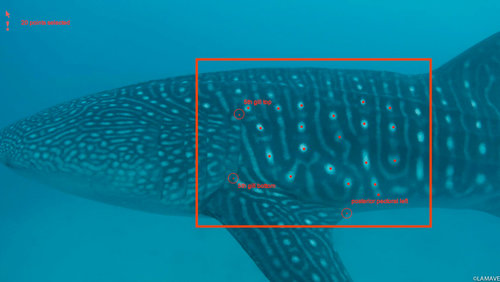
Whale sharks may be identified by the unique spotting patterns on their bodies. These unique patterns, much like human fingerprints, enable scientists and the general public to tell apart individual whale sharks by comparing a photograph of the left side of the body.
Using this method called photo identification or photo ID, anyone can contribute to the collective effort to grasp the worldwide whale shark population by submitting photos to Wildbook for Whale Sharks.
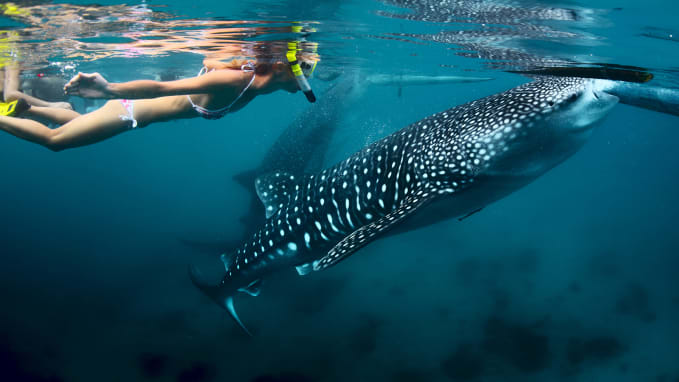
Swimming with the world’s largest shark is a bucket list item for many individuals. Reaching lengths of as much as 40 feet or more, weighing no less than 20 tons and living for as much as 70 years, these animals can look intimidating to people wary of sharks.
As plankton feeders, they forage in shallow waters world wide, which allows countries to make use of these pockets for tourism purposes.
The ethics of interacting with them are complex: the revenue they convey can profit the local economy and help fund conservation research.
“The whale shark continues to face threats internationally, as well as in Philippine waters due to unregulated tourism and accidental bycatch, but according to Wildbook for Whale Sharks, its recognition as the second largest population of whale sharks in the world is something worth celebrating . LAMAVE hopes that the Philippines will continue to lead in efforts to protect Butanding (tuki, tiki-tiki, taloki, tawiki, tiriki-tiki, iho-tiki), the pride of the country,” LAMAVE concluded.





