


A recent expedition into the heart of the Philippine rainforest by University of Alberta researcher Tom Terzin has yielded a remarkable discovery: two intriguing species of weevil. One of these finds represents a completely new species to science, while the other has been thought extinct for nearly a century.
The story unfolds in the lush Negros Island, where Terzin meticulously examined insect samples collected in 2016 and 2017 from the bushes within the Northern Negros National Park. This tropical paradise, once teeming with life, had faced near decimation due to rampant logging, agricultural expansion, and population growth in the late 20th century.
Terzin, whose research delves into the fascinating world of insect colour patterns and mimicry, wasn’t initially drawn to a particular short-nosed weevil due to its lack of vibrant colours. However, its very simplicity sparked his curiosity. Unlike its metallic brethren, this small black insect, measuring roughly half an inch, had a unique characteristic: its surface was adorned with light scales scattered in an unpatterned fashion.
This newfound insect, christened Metapocyrtus (Trachycyrtus) augustanae, derives its name from Augustana Campus, a testament to the significant role the university played in the discovery. The species’ striking simplicity, standing in stark contrast to its more flamboyant relatives, makes it truly one-of-a-kind. For Terzin, this discovery represents a personal triumph – not only the thrill of unearthing a new species but also the potential insights it offers into the world of animal life.
“They behave in a way that reminds me of tiny natural robots,” Terzin remarked, describing their behavior. “With their exoskeletons and segmented bodies, they navigate their environment by following basic rules. If they encounter an obstacle, they simply avoid it – quite similar to how a robot would function.”
However, Terzin’s excitement truly soared with the rediscovery of another weevil species, known as Metapocyrtus (Orthocyrtus) bifoveatus, also called the short-nosed weevil. This insect’s last confirmed sighting on the island dated back roughly a century ago, leading scientists to believe it was lost forever due to the decline of its lowland rainforest habitat. The rediscovery of new specimens, thriving in the island’s higher forested areas, is undoubtedly positive news for the Philippines’ biodiversity.
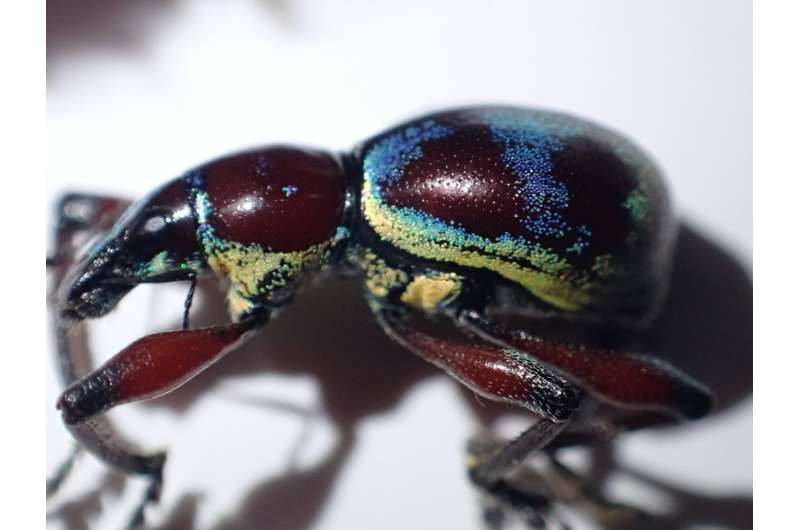
“This species has somehow managed to survive at elevations exceeding 1,000 meters,” Terzin exclaimed, “demonstrating a remarkable fight for life and a refusal to succumb to extinction in the face of deforestation. In the insect world, this is akin to finding a dodo bird!”
While weevils are a ubiquitous presence in rainforests and constitute the largest family of beetles, understanding the existence of both these weevil species is crucial. Terzin highlights the potential for both weevils, particularly the short-nosed weevil, to become agricultural pests, especially with the looming threat of climate change.
“They’re like asteroids hurtling through space,” Terzin explained with a touch of analogy. “While some may not pose a threat, the lack of knowledge about them makes them all the more dangerous. This underscores the importance of monitoring their populations – and that necessitates their discovery in the first place.”
Both newly discovered weevils currently reside at the Augustana Tropical Insect Research Center, where they will serve as valuable resources for future research and educational endeavors. As one of the few Western researchers granted access to the Philippines’ national parks, Terzin hopes his discoveries will not only yield more fascinating finds during his planned return in 2025 but also pave the way for increased collaboration between the Philippines and international scientists.





